
For teledentistry, the patient's state generally decides which license you need, because laws such as Florida's treat care as delivered where the patient is. Florida lets out-of-state dentists register as telehealth providers under section 456.47, but they cannot open an office or treat patients in person there. Prescribing has additional state and DEA limits.
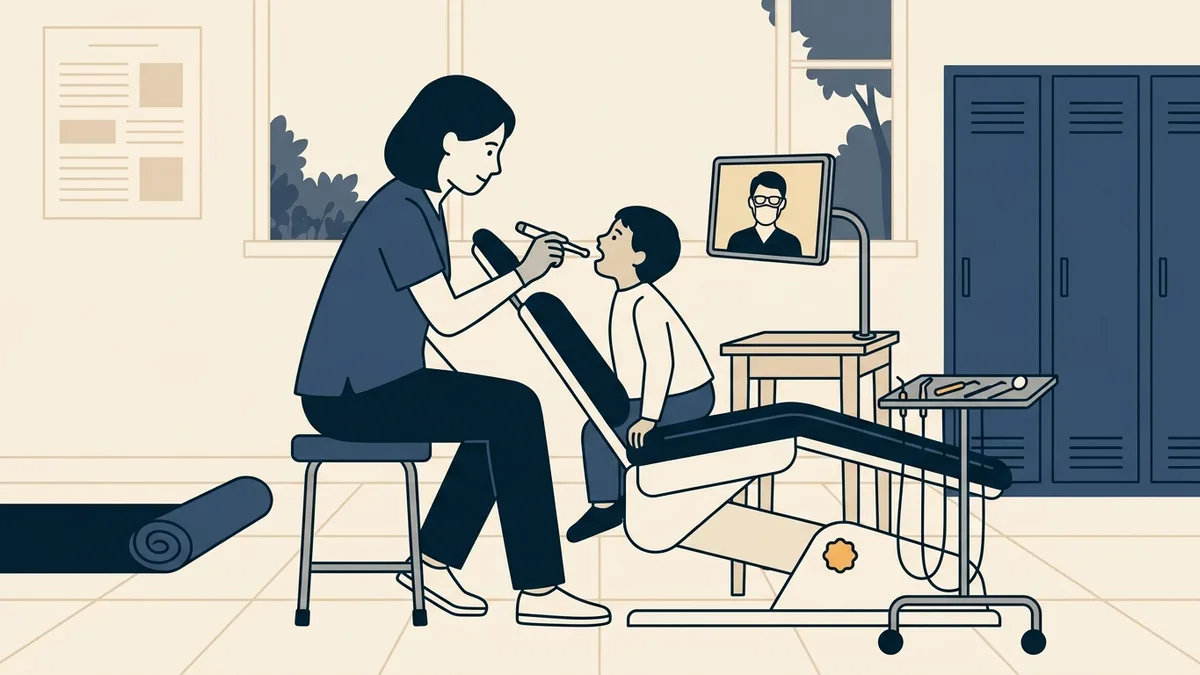
Teledentistry covers a lot of ground: triage video calls, remote review of intraoral photos, aligner case monitoring, consults for a hygienist in a school or nursing home program. The technology is easy. The licensing question is the one that trips people up: which state's license do you need when you are in one state and the patient is in another?
Whose license applies, yours or the patient's state?
The usual starting point is the patient's state. Florida's statute says it directly: "any act that constitutes the delivery of health care services is deemed to occur at the place where the patient is located at the time the act is performed or in the patient's county of residence" (Fla. Stat. 456.47(5)).
That means a dentist licensed only in Georgia who reviews records and advises a patient sitting in Florida is practicing in Florida. Unless Florida has an exception or registration that fits, that dentist needs Florida authority.
How does Florida's telehealth registration work for dentists?
Florida's telehealth law covers providers licensed under chapter 466, the state's dental practice act, and it lets some out-of-state professionals register rather than hold a full Florida license. Under section 456.47(4), the board registers an out-of-state health care professional as a telehealth provider if the professional:
- Completes the application in the format the department prescribes.
- Holds an active, unencumbered license from another state that is substantially similar to the Florida license.
- Has had no disciplinary action on that license in the five years before applying.
- Designates a registered agent in Florida for service of process.
- Maintains professional liability coverage that includes telehealth care for patients outside the home state, in the amount the statute sets.
The registration has hard limits. A registered provider "may not open an office in this state and may not provide in-person health care services to patients located in this state." The department publishes each registrant's details, including disciplinary history and malpractice coverage, and uses the National Practitioner Data Bank to verify applications. For a dentist who wants to see Florida patients in person, the full license route applies, and Florida has no general credentials route. See getting a Florida dental license.
Florida also exempts two situations from registration: care "in response to an emergency medical condition," and care "in consultation with a health care professional licensed in this state who has ultimate authority over the diagnosis and care of the patient" (§456.47(6)).
Do other states work the same way?
Not uniformly. Some states have telehealth registrations similar to Florida's; many do not, and many apply different rules to different professions. Consultation exceptions also vary. Our sister site tracks the registration states for medical telehealth in telehealth registration states, and its post on telehealth licensure exceptions explains how consultation carve-outs usually work. For dentistry, check the dental board and the state's telehealth statute together; do not assume a medical rule extends to dentists.
What about prescribing by teledentistry?
Prescribing adds federal and state layers. Florida bars prescribing a Schedule II controlled substance by telehealth except for listed purposes such as psychiatric treatment or hospice care (§456.47(2)(c)). Federal DEA rules for telemedicine prescribing have changed repeatedly, and the DEA's own telemedicine page says it is "in the process of drafting updated regulations." A DEA registration is also state-specific. See DEA and state controlled substance registrations for dentists.
Will the dental compact cover teledentistry?
Possibly, someday. A compact privilege would authorize practice in a remote state "within the Scope of Practice authorized by the Remote State," according to the model law. But the compact issues no privileges yet, and no start date is published. Plan around state licenses and registrations. See the dental compact, explained.
What should a teledentistry program check before launch?
- Where the patients are, by state, and whether your dentists hold a license or registration in each.
- Whether a hygienist or assistant on the patient's end is working within that state's supervision rules. See hygienist supervision rules.
- Prescribing limits, DEA registrations and any state prescription monitoring requirements.
- Recordkeeping: Florida requires telehealth services to be documented "according to the same standard as used for in-person services."
Our Dentist License by Credentials service ($799 per state) prepares full licenses for the states where your patients are, and our $149 Dental Licensure Readiness Review maps which states your current licenses and history can reach. You complete, sign and submit every application or registration yourself.
Common questions
- Do I need a license in the patient's state for a teledentistry consult?
- Usually. Florida's statute, for example, treats care as delivered where the patient is located. Some states offer registrations or consultation exceptions, so check the specific state.
- Can an out-of-state dentist register for telehealth in Florida?
- Yes. Section 456.47(4) lets an out-of-state professional with an active, unencumbered license and no discipline in five years register, with a Florida registered agent and liability coverage. Registrants cannot open a Florida office or treat patients in person.
- Can I prescribe controlled substances through teledentistry?
- Only within state and federal limits. Florida bars Schedule II prescribing by telehealth except in listed situations, and DEA registration is state-specific. The DEA says it is drafting updated telemedicine regulations.
Need Help with Your Application?
We prepare the dental licensing process end-to-end — eligibility screening, documents, board follow-ups, and tracking.