
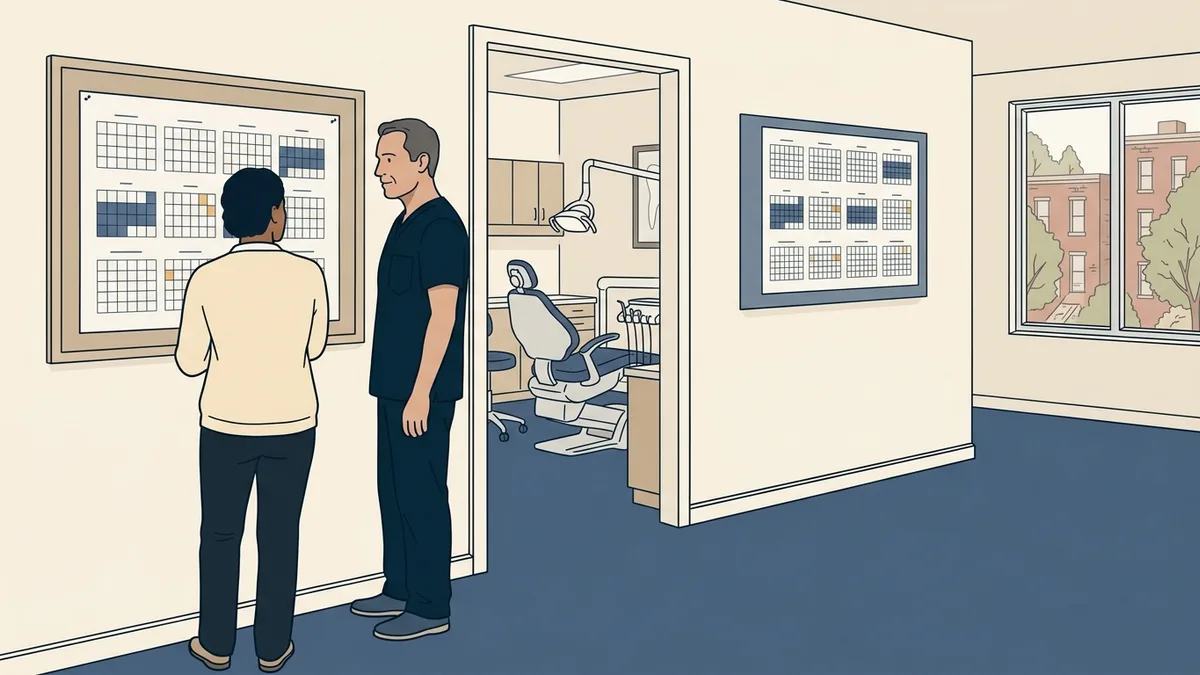
Virginia licenses a dentist by credentials under 18VAC60-21-210(B) after five of the last six years of continuous clinical practice in another US jurisdiction or federal service, with at least 600 hours in each counted year. You need the National Boards, an acceptable clinical exam and good standing everywhere you have been licensed. The fee is $500.
Virginia's Board of Dentistry offers dentists licensed elsewhere a clear credentials route with one demanding number: five of the last six years of continuous clinical practice. Virginia has also enacted the Dentist and Dental Hygienist Compact, which leads some dentists to expect a faster option. There is none yet, because the compact is not issuing privileges in any state.
What does Virginia require for licensure by credentials?
The rule is 18VAC60-21-210(B), last amended effective October 24, 2024. Every credentials applicant must:
- have passed all parts of the National Board Dental Examination given by the Joint Commission on National Dental Examinations;
- have successfully completed a clinical competency examination acceptable to the Board;
- hold a current, unrestricted dental license in another US jurisdiction and "be certified to be in good standing by each jurisdiction in which a license is currently held or has been held"; and
- have been "in continuous clinical practice in another jurisdiction of the United States or in federal civil or military service for five out of the six years immediately preceding application."
The good-standing certification reaches back to every license you have ever held, not just your current one. Old licenses from a residency year or a short move still need a certification. See license verifications for dentists and hygienists.
How does Virginia count a year of practice?
The rule says "one year of clinical practice shall consist of a minimum of 600 hours of practice in a calendar year as attested by the applicant." Two details help some applicants:
- The 600-hour floor is modest. Part-time dentists who work a couple of days a week can reach it.
- Some non-traditional patient care counts. The Board "may" accept active patient care in another US jurisdiction as a volunteer in a public health clinic, as an intern or in a residency.
The hard part is "continuous." A dentist who stopped practicing for parental leave, an illness or a move may fall short in a calendar year. Five of six gives one year of slack, but only one. Our post on years-of-practice rules compares Virginia's test with other states'.
Can I apply by examination instead?
Under 18VAC60-21-210(A), an exam applicant needs the National Board and a clinical competency exam the Board accepts. If that clinical exam was passed five or more years before the Board receives your application, you "may be required to retake an examination or complete clinical training" unless you show you have maintained practice in another US jurisdiction or in federal civil or military service "for 48 of the past 60 months." After three failures of any section of a clinical exam, a candidate needs at least 14 hours of additional clinical training in each section before a fourth attempt.
How much does Virginia charge?
18VAC60-21-40 sets these application fees:
- Dental license by credentials: $500
- Dental license by examination: $400
- Faculty license or temporary dental permit: $400 each
- Restricted teaching license: $285
- Oral and maxillofacial surgeon registration: $175
- Cosmetic procedures certification: $225
- Moderate sedation permit: $100
- Deep sedation/general anesthesia permit: $100
Renewal of an active dental license is $285. Virginia renews annually, and 18VAC60-21-250 requires at least 15 hours of continuing education "for each annual renewal of licensure, except for the first renewal following initial licensure," plus current CPR or BLS with hands-on airway training. Dentists who give or monitor moderate or deep sedation or general anesthesia have added CE requirements. See dental CE requirements across states.
Do sedation and surgery need separate registrations?
Yes. Moderate sedation and deep sedation or general anesthesia each need a Virginia permit, and oral and maxillofacial surgeons register separately. The compact would not change this: CSG's compact FAQ says states keep their own sedation and anesthesia permit requirements. See dental sedation and anesthesia permits by state.
What does Virginia's compact membership mean today?
Virginia is one of 13 states that have enacted the Dentist and Dental Hygienist Compact. The Council of State Governments says "compact privileges are not yet being issued," and there is no application process, fee or start date. A dentist who wants to work in Virginia now needs a Virginia license. Why the dental compact is not issuing privileges yet explains the delay.
Should you get help with a Virginia file?
Our Dentist License by Credentials service is $799 for Virginia. We lay out your last six calendar years against the 600-hour test, order good-standing certifications from every jurisdiction where you have held a license, confirm your National Board and clinical exam records, and give you a question-by-question guide to the application. You attest to your hours, sign, pay the Board and submit it yourself. Sedation permits are $699 each, and Annual Renewal and CE Compliance is $299 per license, per year. Board fees are separate. See the Virginia requirements page or start with the $149 Dental Licensure Readiness Review.
Common questions
- How many hours count as a year of practice in Virginia?
- At least 600 hours of practice in a calendar year, as attested by the applicant. You need five such years out of the six before you apply.
- Can I use the dental compact to work in Virginia?
- Not yet. Virginia has enacted the compact, but the Council of State Governments says compact privileges are not yet being issued. You need a Virginia license.
- Does residency count toward Virginia's five years?
- It can. The rule says the Board may accept active patient care as a volunteer in a public health clinic, as an intern or in a residency program.
- How much CE does Virginia require?
- At least 15 hours for each annual renewal, except the first renewal after initial licensure, plus current CPR or BLS with hands-on airway training.
Need Help with Your Application?
We prepare the dental licensing process end-to-end — eligibility screening, documents, board follow-ups, and tracking.