
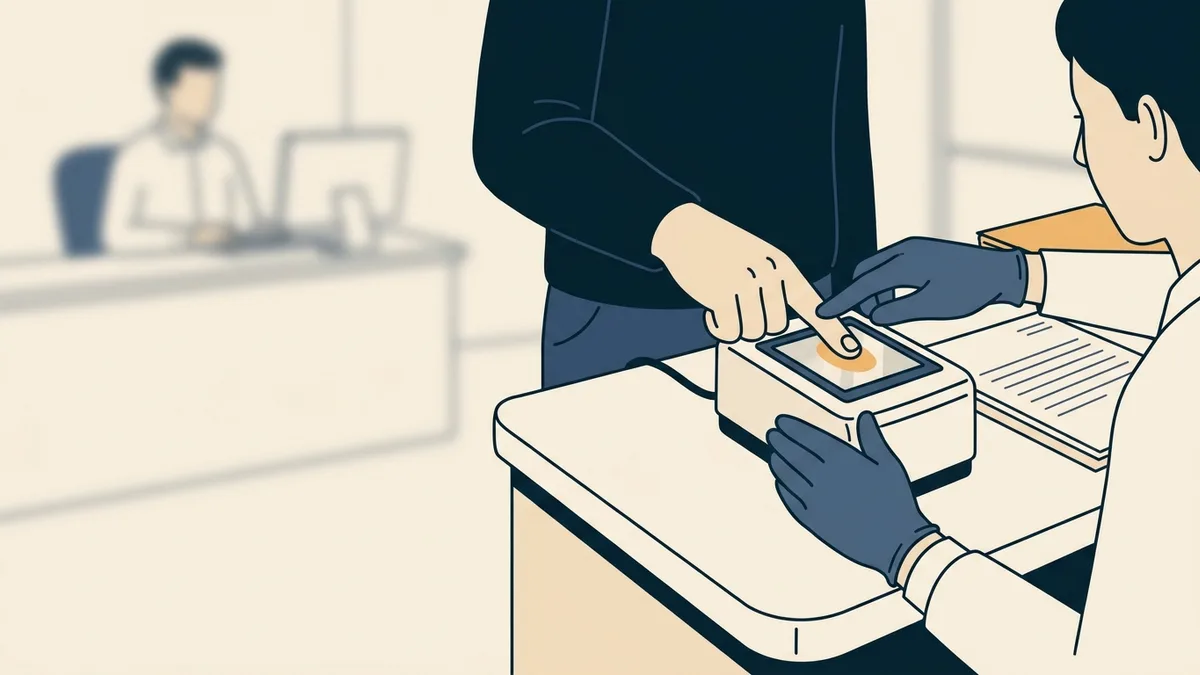
Most dental boards require fingerprints for a state and FBI background check. Florida requires electronic Livescan prints with the correct ORI code or the board never receives the results. California's Live Scan works only in California; out-of-state applicants can use ink cards for a $49 fee. Arizona requires a fingerprint clearance card.
Background checks are a standard part of dental licensing, and fingerprints are how most boards get them. The check itself is usually routine. The trouble comes from logistics: the wrong vendor, the wrong agency code, prints rejected as unreadable, or results sent somewhere the board never sees them. Any of those can leave an otherwise complete application waiting for weeks.
How does Florida handle dental fingerprints?
Florida's Board of Dentistry tells applicants that the 2024 House Bill 975 "requires this profession to complete electronic fingerprinting" and that an application "cannot be approved until this requirement, along with all other licensure criteria, has been met." Applicants for initial licensure must use a Livescan service provider to submit fingerprints to the Florida Department of Law Enforcement for a search of Florida and national criminal history records; results go to the Care Provider Background Screening Clearinghouse for the Department to consider. The prints are retained by FDLE and the Clearinghouse, and all costs are paid by the applicant.
The detail that causes most Florida delays is the ORI number. The board says that if you provide no ORI or an incorrect one, "the board office will not receive your fingerprint results," and it adds that "the applicant is fully responsible for selecting the service provider and ensuring the results are reported to the Department." Take the board's form with you to the Livescan appointment.
Why is California different?
California's Dental Board requires all license applicants to submit fingerprints for a criminal history check (citing Bus. & Prof. Code § 144), and a license or permit will not issue until clearance comes back from the California Department of Justice and the FBI. The board's regulation requires two classifiable sets. You have two methods:
- Live Scan, which is "available only in California, for either residents or visitors." The board sends you a Request for Live Scan Service form after your application is submitted, reviewed and paid. The Live Scan site charges its own fee. The DOJ report usually arrives within seven days.
- Ink cards, for applicants who cannot be fingerprinted in California, taken at a law enforcement agency on the board's cards, with a non-refundable $49 fingerprint fee paid to the board.
The Dental Hygiene Board of California has its own process. Hygienists contact the DHBC for Live Scan forms or to request hard cards, and the DHBC says its background review "can take much longer if a criminal history does exist." The Dental Board's oral and maxillofacial surgery permit also requires classifiable fingerprints by Live Scan or hard cards.
Does Arizona use a different system?
Arizona's statute requires each dental license candidate to "obtain a valid fingerprint clearance card issued pursuant to section 41-1758.03" (Ariz. Rev. Stat. § 32-1232(B)). A clearance card is a separate credential, issued through the state's fingerprint clearance process, so apply for it early.
Are assistants fingerprinted too?
Often. DANB's Texas chart lists fingerprint submission for criminal history record information as one of the requirements for a Registered Dental Assistant. California requires Live Scan or hard-card fingerprints for its RDA license. If you manage a team, budget fingerprint appointments for assistants, not just for dentists and hygienists.
Can I reuse fingerprints from another board?
Rarely. Florida's system routes results by ORI to the Department of Health, so prints taken for a different agency do not reach the dental board. California issues its Live Scan request form for your specific application. Plan on fresh prints for each state and each license type unless the board tells you otherwise in writing.
What happens when the background check finds something?
A record does not end the application, but it changes the review. California's Dental Board says each applicant is "evaluated on a case-by-case basis" and that a conviction "does not automatically preclude" licensure; convictions substantially related to dentistry within seven years can be grounds for denial. Florida asks applicants to list every offense other than minor traffic offenses and to send arrest records, final dispositions and proof of completed sanctions, and says violent crimes and repeat offenders go to the full board. Our post on disclosing discipline and criminal history covers how to present it.
Which habits keep fingerprints from delaying the file?
- Read the board's fingerprint instructions before booking. Note the vendor, the code and the form.
- Book promptly when the board releases the form; California sends it only after the application is paid.
- Use a provider used to licensing prints, and ask for a quality check before you leave.
- Keep the receipt and transaction number, so the board can trace the result.
- Ask the board to confirm receipt about a week later.
Can we coordinate fingerprints for you?
Every state license service we sell, from the Dentist License by Credentials ($799) to the Dental Assistant & EFDA Registration ($149 per person), includes fingerprint coordination: the right form and code, help scheduling the appointment, and follow-up until the board confirms receipt. You attend the appointment and pay the vendor and agency fees. You complete, sign and submit the application. For timelines, see why dental applications take as long as they do.
Common questions
- Why does Florida keep saying it has not received my fingerprints?
- The most common cause is the ORI number. Florida's board says that without the correct ORI the board office will not receive your results. Use the board's form at the Livescan provider.
- Can I do California Live Scan from another state?
- No. The Dental Board says Live Scan is available only in California. Applicants outside California can have ink fingerprints taken on the board's cards and pay a $49 fee.
- Do dental assistants need fingerprints?
- In many states. DANB lists fingerprints among the requirements for a Texas Registered Dental Assistant, and California requires them for its RDA license.
- Will a criminal record stop my dental license?
- Not automatically. California reviews each applicant case by case, and Florida reviews each application on its own merits, with some offenses presented to the full board. Disclosure and documentation matter.
Need Help with Your Application?
We prepare the dental licensing process end-to-end — eligibility screening, documents, board follow-ups, and tracking.